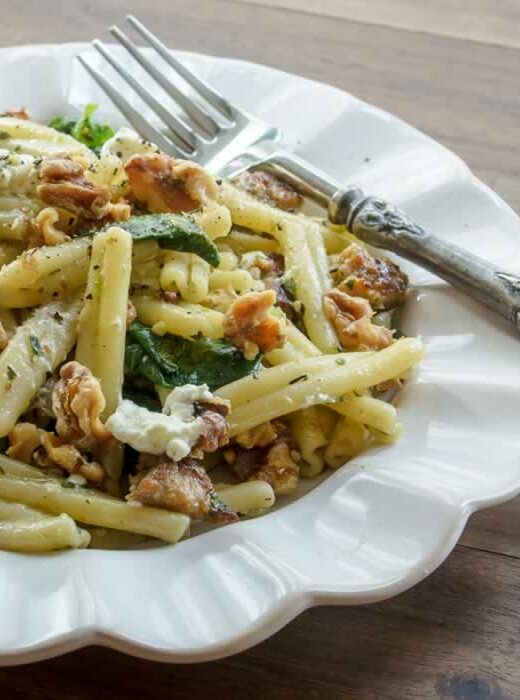
Strozzapreti (stroh-tzuh-PRAY-tee) is one of my all-time favorite pastas. Its 1-inch length and rolled S-shape captures and holds the sauce, while its chewy texture adds character and interest to any pasta dish. It’s always in my pantry.
Original, seasonal recipes by Susan S. Bradley

Strozzapreti (stroh-tzuh-PRAY-tee) is one of my all-time favorite pastas. Its 1-inch length and rolled S-shape captures and holds the sauce, while its chewy texture adds character and interest to any pasta dish. It’s always in my pantry.

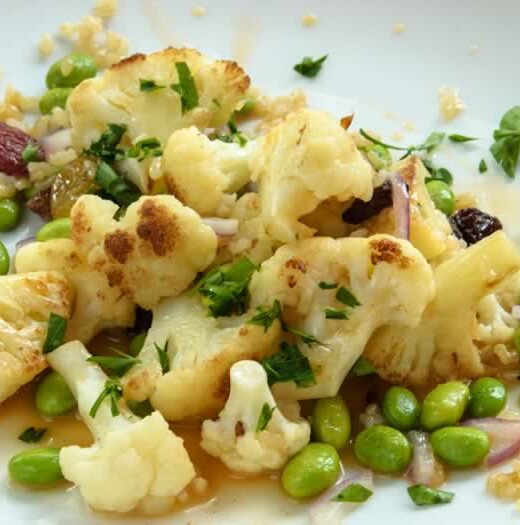
Lately, I find myself staring at creamy white, firm heads of cauliflower in the market and then pass them by for lack of inspiration. Well, not this week. Enough is enough. I boldly pounce on the most beautiful head of cauliflower in the stack and set it my cart.

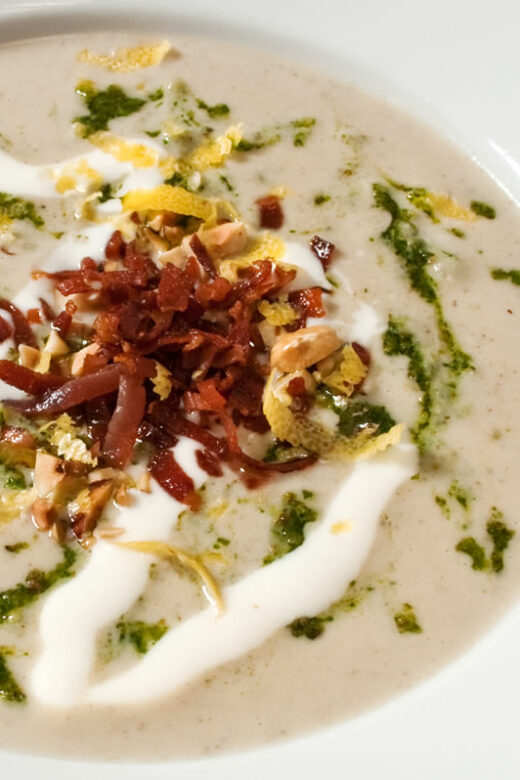
The freshly dug sunchokes (also called Jerusalem artichokes) look so tender and crisp in Northwest farmers markets right now, I couldn’t resist buying several pounds last week–even though I wasn’t sure what I would do with them. My cookbook, Pacific Northwest Palate, Four Seasons of Great Cooking, features a sunchoke pancake, but other than that, I really haven’t given this vegetable its fair due over the years.

I’m intrigued and inspired by the creative ways in which Pacific Rim and Northwest chefs are incorporating spaetzle into their dishes these days. This Old World noodle-dumpling is suddenly being elevated to lofty heights, for the following compelling reasons:
• It’s much easier to make spaetzle than fresh pasta, and yet they have similar characteristics.
• Spaetzle lends itself to partnership with a wide range of companion flavors–from subtle to bold.
• When made with care, spaetzle is soul satisfying.
• Spaetzle has a wonderful chewiness.
• Spaetzle has an endearing homey quality. It’s the ultimate comfort food.

was surprised and thrilled last Saturday at the Seattle University District Farmers Market at how much fresh produce is available this early in the season. Wow!
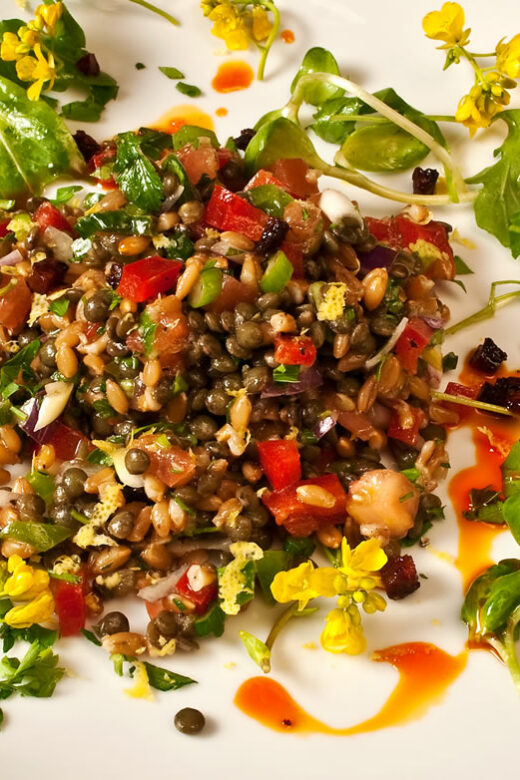
This particular farmers market is one of the few in the region that is open all winter. This past week there were sparkling bundles of tender chickweed, plump sunflower seed sprouts, tiny yellow flowering bok choy, sorrel, baby arugula, dandelion greens, and mint. I bought way too much and then had to quickly devise a few salads to use the bounty.

I have loved rhubarb for as long as I can remember. As kids, my brother, Daniel, and I would pilfer it from between the pickets of the deteriorating white fence that separated our yard from the neighbor’s. We thought of it as “high crime,” stealing if you will, but as I look back on our shenanigans now, I realize that no one but us gave a darn about that forgotten patch of rhubarb.

Every year, I rush to Seattle’s Pike Place Market (PPM) in March, expecting to be greeted by a jubilant array of local vegetables, tulips, and daffodils. The tulips and daffodils are always there, and this year is no exception. They are over-the-top magnificent. The local vegetables though are never anywhere to be seen. I know this will be the case, but I can never quite believe it.

Red lentils are wonderful legumes. They look as good as they taste—something of a feat for a member of the legume family. This soup is a casual meal in a bowl, with layers of flavor, heat, and spice—plus a nice balance between the sweetness of the vegetables and the acidity of the lemon juice and sour cream. It tastes best if made a day or two ahead, but we can never wait.
... a lively celebration of regional food and culinary craft, season by season, with original recipes by Susan S. Bradley
Copyright © 2013 · News Theme on Genesis Framework · WordPress · Log in